
Choosing bathroom finishes: start with a small set of samples
Tiles, brassware and cabinetry need to work together. Comparing a few physical samples can turn a long wish list into a clearer design direction.
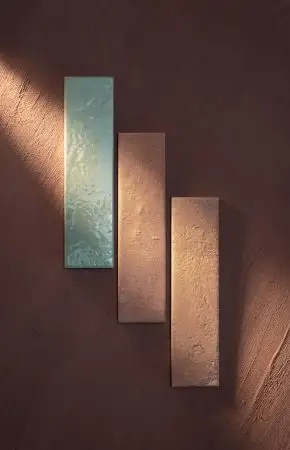
A tile can look right on its own and feel quite different beside the tap finish or cabinet you have chosen. Looking at materials together helps you make decisions about the whole room. Alfa Tiles invites customers to explore textures and palettes in its design studio and uses mood boards as part of its bathroom design service.
Begin with one decision you care about
Choose a starting point: perhaps a tile, a timber tone or a finish you already love. Then compare a small number of options around it. You might prefer quiet surfaces with one stronger detail, or a more expressive mix of pattern and texture. There is no need to settle every product at once, but each choice should support the room you want to create.
Look at the combination in different light
Place the samples next to one another rather than judging them from separate photographs. Notice whether their undertones feel warm or cool and how glossy or matt surfaces catch the light. Where samples are available to take home, ask to view them in the room at different times of day. A screen image is useful for inspiration; it is a limited guide to colour and texture.
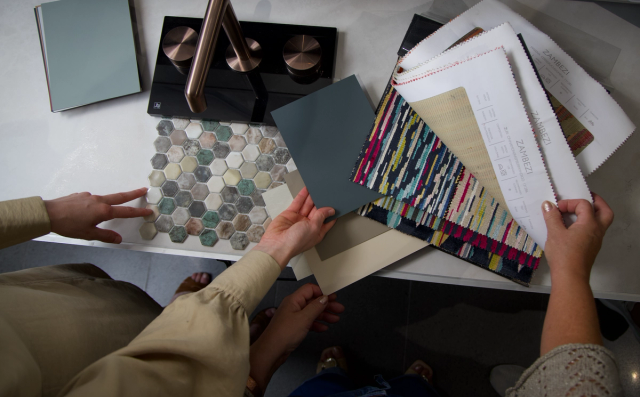
Consider the scale as well as the colour
A small sample shows only part of a larger pattern. Ask how a tile or slab will look across the wall, where joints will sit and how edges, corners and niches might work. Alfa Tiles offers large-format tiling, but the right format depends on the room and the planned installation. Ask the designer and installer to explain the proposed layout before ordering.
Keep practical questions beside the samples
Ask which products suit the intended wall, floor or wet area and what care the manufacturer recommends. Check any specific cleaning, slip-resistance or installation requirements with the team and the product information. A photograph or sample alone cannot confirm technical suitability.
Use the shortlist to move forward
Keep a note of the options you are comparing and what you like about each. Bring that shortlist to your design conversation and ask to see the materials together. A few considered combinations give you something concrete to discuss, while leaving space for guidance and a design that reflects your taste.